Unlock Total Freedom with the Best Prepaid eSIM Deals for Travelers
A prepaid eSIM is a digital SIM card that works without a physical chip. It activates instantly by scanning a QR code, letting you connect to a local network without inserting a plastic card. This provides flexible, upfront pricing for cellular data with no hidden fees or long-term commitments. You simply purchase and install the eSIM profile before traveling or when needing temporary access.
What Sets Pay-As-You-Go Digital SIMs Apart
Pay-as-you-go digital SIMs fundamentally differ from traditional prepaid eSIMs by eliminating credit pack expiry. You load a cash balance that only depletes with actual data usage, rather than buying fixed-time bundles that vanish if unused. For travelling, this means you can top up any amount and pause service indefinitely without losing credit. Unlike standard prepaid eSIMs with rigid 7/30-day plans, your data allowance lasts for years, making it ideal for infrequent travelers or backup connectivity. The instant top-up and usage-based billing ensure you never overpay for idle periods.
How Embedded SIMs Differ From Physical Roaming Cards
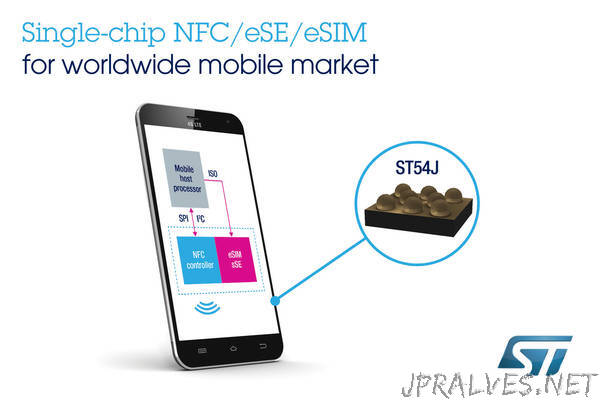
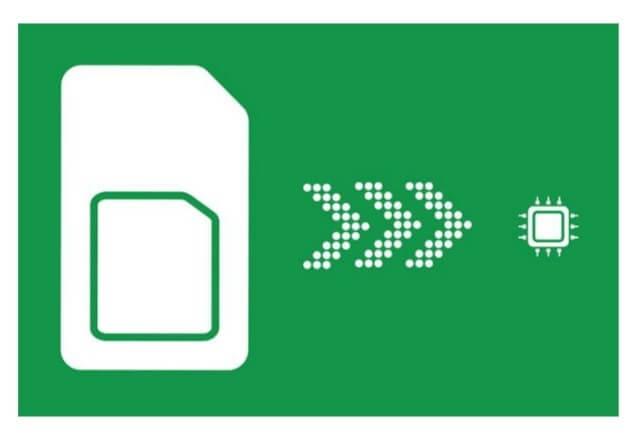
An embedded SIM (eSIM) is a soldered chip in the device, not a removable plastic card. Unlike a physical roaming card, which must be inserted or swapped between trips, an eSIM allows you to activate a prepaid plan remotely via a QR code or app. This eliminates the physical loss risk of a tiny card. The key difference is spatial: a physical roaming card occupies a SIM tray and requires manual storage, whereas an eSIM remains inside the device permanently, freeing the slot for another physical card. Instant over-the-air provisioning replaces insertion. For a typical prepaid eSIM workflow:
- Purchase a digital plan online.
- Receive a QR code or download a profile.
- Scan or install directly to the eSIM chip—no waiting for mail delivery.
Why Travelers Are Shifting From Traditional Tourist SIMs
Travelers are ditching traditional tourist SIMs because they hate the airport hunt for physical cards and the instant connectivity of a prepaid eSIM. With digital SIMs, you buy and install before you leave, so you’re online the moment you land. No more fumbling with tiny SIM trays or worrying about losing your home number. A big shift comes from avoiding rip-off rates at kiosks; prepaid eSIMs often offer transparent, local pricing. Why are travelers shifting from traditional tourist SIMs? Because they want a hassle-free setup, not a chore at customs.
Picking the Right Preloaded eSIM Plan
When picking the right preloaded eSIM plan for prepaid use, first match the data allowance to your travel duration and typical activities like navigation or streaming. Consider regional coverage; a dedicated local plan often offers better speeds than a global one, yet a regional plan can be more cost-effective for multi-country trips. Validate the plan’s hotspot tethering policy if you rely on sharing a connection across devices. A plan’s low total price may not represent good value if it excludes essential services like voice minutes or SMS verification codes. Finally, check the validity window after activation, as some prepaid eSIMs expire based on first use rather than purchase date. Prioritize providers that mention real-time top-up options so you can extend service without buying an entirely new plan.
Regional vs. Global Data Bundles for Your Trip
For your trip, choosing between regional and global data bundles is about matching the eSIM to your actual route. A regional bundle covers a specific set of countries (like Europe or Southeast Asia) for one price, making it cheaper if you stick to that zone. A global bundle spans multiple continents but often costs more per GB. Regional plans usually offer faster speeds in their designated zone, while global data bundles for your trip provide emergency coverage if you island-hop unexpectedly. It is smarter to buy two regional bundles for separate legs than a single global plan if your itinerary is clustered.
Regional bundles save money and speed for focused travel zones; global plans offer flexible coverage but at a higher per-GB cost, best for scattered itineraries.
Matching Your Usage Pattern to a Top-Up Option
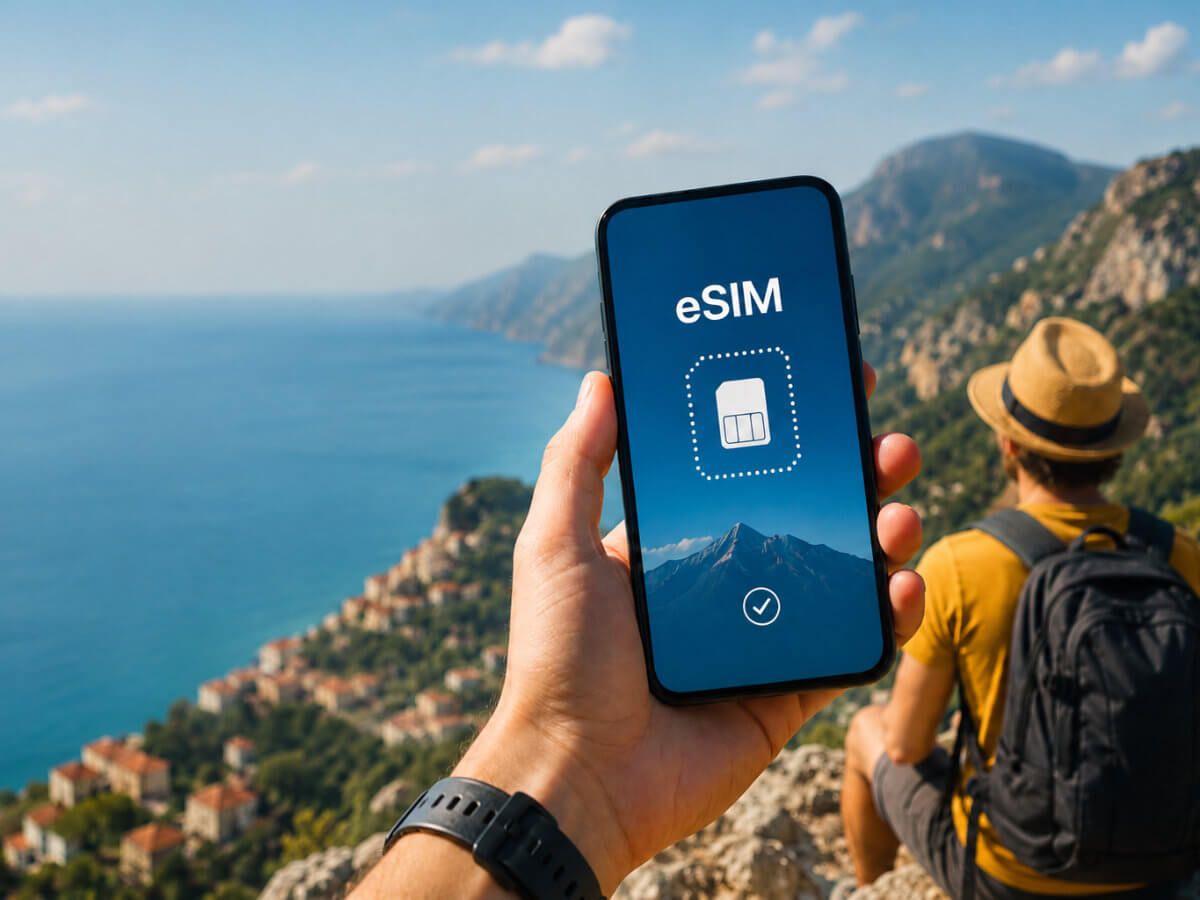
Matching your usage pattern to a top-up option is essential to avoid waste or bill shock. For daily heavy data uses like streaming, choose a volume-based top-up targeting high gigabyte allowances. Evaluate your typical weekly consumption; if you are a light user checking maps and messages, a small, frequent top-up is cost-efficient. Consider a validity-based top-up if your trip is long but data usage is sparse, ensuring connectivity without overpaying for unused data.
| Usage Pattern | Best Top-Up Option |
|---|---|
| Daily heavy streaming & video calls | Large volume-based top-up (e.g., 10-20 GB) |
| Occasional browsing & messaging | Small validity-based top-up (e.g., 7 days) |
| Intense short bursts (navigation, social) | Flexible data pack with auto-renewal |
Short-Term vs. Long-Term Validity Choices
When picking a prepaid eSIM, your core decision balances trip duration against cost efficiency. Short-term vs. long-term validity choices hinge on whether you need connectivity for a few days or several weeks. For a weekend getaway, a 7-day eSIM with smaller data caps avoids overpaying for bandwidth you will not use. Conversely, a month-long plan drastically reduces your per-day rate for extended travel. To decide effectively:
- Identify your exact travel dates to avoid unused validity.
- Compare total data allowance across durations, not just price.
- Select the longest plan that still matches your predicted usage.
A 30-day eSIM almost always yields a lower cost-per-GB than two 15-day plans, making it the superior value for consistent usage.
Activating a Credit-Before-You-Travel SIM
You land in Bangkok, phone still on airplane mode. The prepaid eSIM you bought last week needs activation, but this specific “credit-before-you-travel” plan means you topped up your balance before leaving home. Once you connect to a local network, the eSIM automatically deducts the pre-loaded credit to unlock your data allotment. You don’t hunt for a store or load money abroad—the system simply verifies your existing balance against its rate card and lets you roam immediately. A confirmation SMS arrives, and your prepaid eSIM is live without you entering a single payment detail. That upfront credit is your passport, silently consumed only when you open maps or message your hostel.
Installation Steps Without a Physical Card Tray
If your phone lacks a physical tray, initiate the process by navigating directly to Settings > Mobile Service and selecting “Add eSIM.” Your carrier will provide a QR or a confirmation code; scan this immediately upon prompt. Download the prepaid eSIM profile via your phone’s native cellular menu—do not use third-party apps. Your device will finalize the activation within seconds, often without needing a restart. Once installed, your new line becomes active as soon as you arrive in your Singapore eSIM destination country.
Profile Download and QR Code Setup Workflow
The profile download for a prepaid eSIM typically begins after purchase, where you receive a QR code via email or the provider’s app. Scanning this code with your device’s settings initiates the eSIM activation workflow, automatically downloading the carrier profile. For iOS, navigate to Settings > Cellular > Add eSIM; for Android, go to Settings > Connections > SIM Manager. Once scanned, the profile installs within minutes, often requiring a restart. A QR code is a one-time use link—save a backup of the code or details in case of reinstallation. Ensure a stable Wi-Fi connection during download to avoid interruption.
| Aspect | QR Code Setup | Manual Profile Download |
|---|---|---|
| Method | Scan a unique QR code | Enter activation code or URL manually |
| Speed | ~2–5 minutes | ~3–7 minutes |
| Error Risk | Low if code is clear | Higher due to manual entry |
| Backup | Save screenshot of code | Store activation details securely |
Dual SIM Management on a Single Device
Activating a credit-before-you-travel eSIM doesn’t force you to ditch your home number. With dual SIM management, you designate your physical SIM for calls and texts back home, while the travel eSIM handles mobile data abroad. In your device settings, simply label the eSIM as “Cellular Data” and tweak line switching to auto-pick the strongest signal. This ensures you avoid roaming rates on your primary line, all while keeping your home number live. The trick is to disable “Allow Cellular Data Switching” to stop the phone from burning your home SIM’s credit. For a seamless trip, mastering this split is key to efficient prepaid eSIM data routing.
Dual SIM management lets you keep your home number active while directing all prepaid eSIM data to the travel line, preventing accidental roaming charges and ensuring always-on connectivity.
Coverage Considerations for Budget eSIMs
When selecting a budget prepaid eSIM, the primary coverage consideration is that operators often prioritize partnerships with major network providers in prime urban centers, leaving rural or remote areas with limited or no service. You must verify the specific network coverage map for the prepaid eSIM’s underlying carrier, as budget plans frequently roam on a single local network rather than offering comprehensive multi-network access. Furthermore, international travel with a budget eSIM typically restricts full-speed data to specific countries, relying on slower, often unreliable fallback networks elsewhere. Prioritize plans that explicitly disclose their roaming partner agreements for your destinations to avoid sudden connectivity gaps.
Network Partnership Versus Native Operator Access

When choosing a prepaid eSIM, you face a trade-off between network partnership aggregators and native operator eSIMs. Aggregators partner with local networks to offer broad, often cheaper coverage, but your connection routes through a third party, which can introduce latency or throttling during congestion. Native operator access gives you a direct, prioritized slot on that specific carrier’s tower, usually ensuring faster speeds and lower ping for critical use like video calls. Aggregators win on multi-country flexibility; native access wins on direct network priority for consistent performance.
- Aggregator eSIMs rely on wholesale deals, so your traffic may be deprioritized behind the carrier’s own postpaid customers.
- Native operator eSIMs often support faster activation and local 5G standalone networks, while aggregators might cap you to 4G roaming profiles.
- With an aggregator, switching between partner networks can stabilize a weak signal; a native eSIM locks you to one tower’s infrastructure.
Assessing Signal Strength in Remote Destinations
When you’re way off the grid with a prepaid eSIM, don’t just trust the bars on your phone. Check partner network coverage maps before you go, as budget plans often roam on a single local carrier. In remote areas, try manually selecting a different local network on your phone to compare signal strength. If you’re hiking, hold your phone higher or find a clear line of sight to the horizon. A cheap eSIM might work fine in a valley but drop completely behind a ridge, so always download offline maps as a backup.
5G and LTE Availability With No-Contract Plans
With no-contract plans, 5G and LTE availability on prepaid eSIMs hinges on carrier network access rather than plan tier. Most budget eSIMs offer LTE as baseline, often throttled after a data cap is reached. True 5G access is common, but speeds may be deprioritized compared to postpaid users during congestion. Check whether the eSIM provider explicitly lists 5G support for your device; without it, the connection defaults to LTE. Roaming scenarios further complicate availability, as some no-contract eSIMs restrict 5G to home networks while enforcing LTE abroad. Prioritize carriers with transparent, non-throttled 5G access for consistent speeds.
Cost Efficiency and Hidden Fees
When you compare traditional roaming charges to a prepaid eSIM, the cost efficiency becomes clear immediately. I remember landing in Tokyo and activating a local data pack through a QR code, paying a flat, one-time fee with no surprises. Unlike physical SIMs or postpaid roaming, which often bury costs like service fees or reactivation charges, the upfront price you see is the price you pay. The hidden fee you avoid is the “connection fee” or the “daily minimum usage charge” that traditional carriers quietly slip onto your bill. With prepaid eSIMs, your budget stays intact because there are no complicated billing cycles, no surprise surcharges for exceeding a tiny data cap—just the single, transparent purchase that covers exactly what you need.
Comparing Per-Gigabyte Rates Across Providers
When evaluating prepaid eSIM cost efficiency, comparing per-gigabyte rates across providers reveals significant variation that a flat plan price hides. For example, a provider offering 10 GB for $20 yields a $2.00/GB rate, while another charging $15 for 3 GB results in $5.00/GB. This disparity often widens at lower data tiers, where smaller bundles carry a premium markup that can triple the effective rate per gigabyte. Analyzing these granular figures is essential to identifying the true cost of mobile data and avoiding overpaying for unused capacity.
Fair Usage Policies and Data Throttling Limits
Prepaid eSIM users must scrutinize Fair Usage Policies and Data Throttling Limits, as these hidden cost traps slash speeds after a soft cap, not a hard cut-off. You pay for “unlimited” data, but the provider halts streaming and downloads once you exceed the hidden threshold, rendering the connection near-useless for navigation or calls. Ironically, heavy data use to avoid overage fees triggers the throttling that destroys any remaining value. Always check the specific “unlimited” fine print—some plans reset the throttle daily, others monthly, drastically altering cost-per-gigabyte reality.
Fair Usage Policies and Data Throttling Limits covertly reduce high-speed data after a hidden cap, turning “unlimited” prepaid eSIM plans into expensive, near-disconnected experiences.

Currency Conversion and Payment Platform Charges
When buying a prepaid eSIM, currency conversion and payment platform charges can silently inflate your total cost. Your bank or card issuer often applies a foreign transaction fee on top of the provider’s listed price, typically 1–3%. The eSIM vendor’s checkout system may also add a dynamic currency conversion markup if you opt to pay in your home currency instead of the local one. Skipping the “pay in your currency” option at checkout can trim real dollars from your bill.
- Check your card’s foreign transaction fee before purchasing.
- Always choose to pay in the vendor’s local currency to avoid DCC markup.
- Compare prices on the eSIM site in your own currency to see hidden fees.
- Use a fee-free travel card to eliminate bank conversion charges.
Security and Privacy With Upfront Payment Cards
Security and privacy with upfront payment cards for prepaid eSIMs are inherently higher because no personal banking data is linked to the account. Since you pay only with a pre-loaded balance, there is zero risk of card theft or unauthorized charges from the eSIM provider. Your real identity remains shielded, as the provider cannot access your billing address or credit history. This makes upfront payment cards for prepaid eSIM ideal for travelers or privacy-conscious users who want connectivity without exposing financial details. Even if the eSIM platform is compromised, your actual funds stay safe because the card has no overdraft or linked accounts.
Personal Data Exposure Risks During Registration
When signing up for a prepaid eSIM, you often hand over your email, name, and payment details. This registration data can be exposed if the provider’s site lacks basic encryption, putting you at risk for identity theft. Always look for a padlock in your browser bar before entering info. Some cheap eSIM sellers even store your passport scan without proper safeguards, making personal data exposure risks during registration a real concern. Q: Should I use a temporary email for eSIM registration? Yes, a disposable email helps shield your primary inbox from potential leaks or spam tied to the sign-up process.
Encryption Standards for Mobile Network Access
Prepaid eSIMs rely on robust network encryption standards like AES-256 and 3GPP-specified mutual authentication to secure mobile network access. Upon activation, the eSIM profile uses symmetric key cryptography for encryption between the device and the core network, preventing unauthorized interception of signaling data. For actual data transport, standards such as IPsec or TLS 1.3 are frequently applied over the air interface. Encryption keys are derived from the unique integrated circuit card identifier (ICCID) and are never stored in plaintext on the device.
- Mutual authentication ensures both the device and network verify each other before encryption begins.
- AES-256 protects over-the-air traffic from decryption by third parties.
- TLS 1.3 secures data sessions after network attachment, guarding user payload.
Remaining Anonymous With Cash-Loaded Profiles
Maintaining anonymity with cash-loaded profiles requires purchasing a prepaid eSIM via untraceable currency, such as physical cash at a retail outlet, avoiding any digital payment link to your identity. The eSIM profile is activated without providing personal details, ensuring no association with your name or address. This approach works best with providers that do not mandate email verification or registration, allowing complete separation from your online footprint. Cash-funded, no-registration eSIM profiles offer a direct path to privacy.
- Buy eSIM activation codes with cash at convenience stores to avoid digital trails.
- Select providers that accept payment without email or phone number submission.
- Use disposable devices or separate phones to further isolate your identity from the eSIM.
- Reload with additional cash vouchers to extend service without linking to a bank account.
What Makes a Prepaid eSIM Different From a Physical SIM
How the Embedded Chip Stores Your Mobile Plan
No Plastic Card, No Waiting for Delivery